
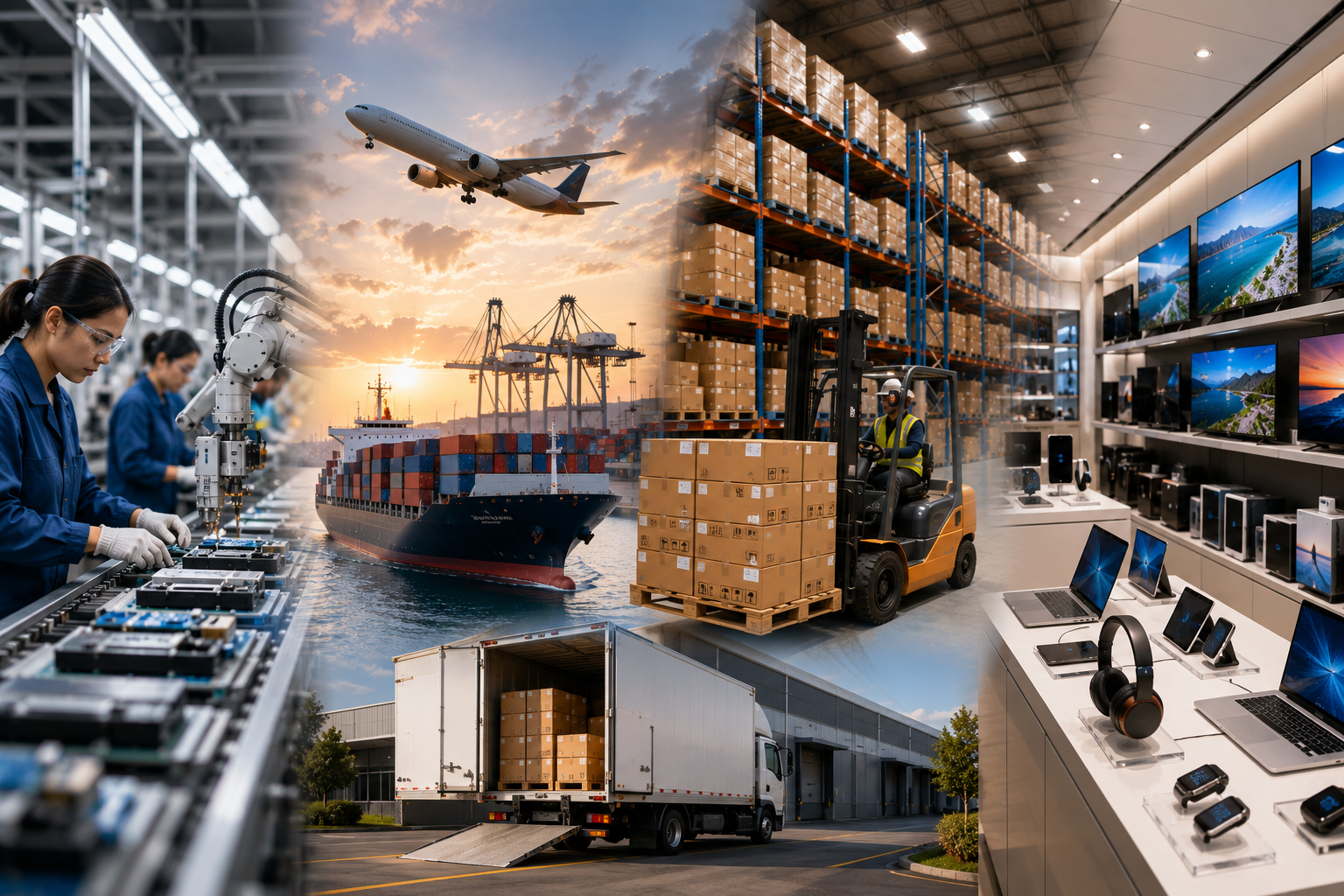
Brands entering the Australian market often assume a distributor simply moves boxes from a warehouse to a retail shelf, but the role is considerably broader and more strategic than that. A home appliances distributor Australia brands rely on typically manages compliance, warehousing, retail relationships, pricing strategy, and after-sales support, functioning as the operational bridge between an overseas manufacturer and a fragmented, compliance-heavy local retail market. This guide explains what the role actually involves and why it matters to both retailers sourcing new products and brands trying to establish a foothold in the region.
Managing Compliance and Product Certification
Before a single unit reaches a retail shelf, a distributor is responsible for ensuring products meet Australian and New Zealand safety, electrical, and labelling standards. For home appliances this includes Regulatory Compliance Mark certification, energy rating labelling where applicable, and compliance with the Australian Consumer Law regarding warranties and safety disclosures. A capable home appliances distributor Australia brands work with will manage testing schedules, liaise with certification bodies, and keep documentation current as standards are updated, which is a continuous obligation rather than a one-off task at launch. This work is largely invisible to end consumers but is one of the most important functions a distributor performs, since non-compliant stock can be seized at the border, recalled after sale, or refused by retailers during onboarding audits, any of which can set a brand’s market entry back by months. Distributors also maintain the paperwork trail retailers now routinely request during vendor audits, including test certificates and country-of-origin declarations, which speeds up onboarding considerably.
Warehousing, Inventory and National Fulfilment
Distributors hold physical inventory and manage the logistics of getting stock to retail partners across metro and regional Australia within the delivery windows retailers demand. This requires warehousing positioned to serve national demand efficiently, inventory systems that can forecast seasonal spikes, and the ability to fulfil both bulk retail replenishment orders and, increasingly, direct-to-consumer online orders. Retailers rely on distributors to maintain consistent stock availability, since a supplier that cannot fill orders reliably risks losing shelf space regardless of product quality. Effective inventory management also means balancing container shipments from overseas manufacturers against actual sell-through data, avoiding both stockouts during peak periods like Christmas and EOFY sales, and excess stock that ties up capital and warehouse space unnecessarily. Many distributors also manage returns processing and reverse logistics, which retailers increasingly expect to be handled locally rather than shipped back offshore.
Building and Managing Retail Relationships
One of the most valuable functions a distributor performs is holding established relationships with retail buyers across major chains and online marketplaces. Rather than a new brand having to introduce itself cold to a category buyer at JB Hi-Fi, Harvey Norman, or Amazon Australia, an established home appliances distributor in Australia can present products to buyers it already has a working relationship with, significantly shortening the path to a listing. This includes negotiating trading terms, managing promotional calendars, coordinating point-of-sale material, and handling the ongoing account management that retail partners expect, such as responding to purchase orders and resolving supply issues quickly. Buyers place real weight on a distributor’s track record, since a supplier who has consistently delivered for other brands is a lower-risk proposition than an unfamiliar name pitching directly.
Pricing Strategy and Margin Management
Distributors set wholesale pricing structures that need to work simultaneously for the brand’s margin targets, the distributor’s operating costs, and retailer margin expectations across multiple sales channels. This is a more delicate balancing act than it appears, since pricing that is too aggressive online can undercut bricks-and-mortar partners and damage retail relationships, while pricing that is too high can leave a product uncompetitive against established category leaders. A distributor typically manages recommended retail pricing guidance, channel-specific pricing where appropriate, and promotional pricing during major sales events, all while protecting brand positioning across the market. Getting this wrong is a common cause of channel conflict, where a brand’s own online store or a discount marketplace undercuts the retail partners it depends on for volume.
After-Sales Support and Warranty Management
Australian Consumer Law places binding warranty obligations on suppliers, and distributors are usually the party managing warranty claims, repairs, and returns on behalf of overseas brands that have no local service infrastructure. This includes operating or coordinating local repair networks, managing spare parts inventory, and handling customer service escalations that retailers pass back when a product fault arises. Retailers factor a supplier’s after-sales reliability into ongoing listing decisions, making this function directly tied to a brand’s long-term retail relationships rather than a peripheral cost centre. A distributor with an established service network can also resolve claims faster, which matters directly to customer satisfaction scores that retailers track against each supplier.
Marketing and Merchandising Support
Beyond logistics and compliance, many distributors also contribute to how a brand is presented at retail, coordinating point-of-sale displays, staff training, and co-op advertising campaigns tied to major sales periods. This support helps a brand compete for visibility inside busy stores and on crowded marketplace listings, where product discovery is increasingly driven by promotional placement rather than organic browsing. A distributor with strong retailer relationships can often secure better promotional slots and more favourable placement than a brand negotiating alone, which compounds over time into stronger sell-through and more secure shelf space.
Frequently Asked Questions
What does a home appliances distributor in Australia actually do?
A home appliances distributor manages product compliance, warehousing, national fulfilment, retail relationships, pricing, and warranty support, acting as the operational link between an overseas brand and Australian retailers.
Why can’t a brand sell directly to Australian retailers without a distributor?
Brands can sell directly, but most lack local compliance knowledge, warehousing, and established buyer relationships, meaning it typically takes far longer and carries more risk than working with an established distributor.
How do distributors differ from wholesalers?
Distributors typically hold formal agreements with brands covering marketing, compliance, and retail representation, while wholesalers usually just buy and resell stock without the broader relationship management or after-sales responsibilities.
Do distributors only work with large retail chains?
No, most distributors service a mix of major chains, independent retailers, and online marketplaces, tailoring fulfilment and account management to each channel’s specific requirements.
What compliance standards apply to home appliances in Australia?
Home appliances generally require Regulatory Compliance Mark certification, energy rating labelling where applicable, and adherence to Australian Consumer Law warranty and safety disclosure obligations.
How does a distributor affect a brand’s retail pricing?
A distributor sets wholesale and recommended retail pricing that balances brand margin targets, retailer expectations, and channel consistency, helping protect brand positioning across multiple sales channels simultaneously.
