
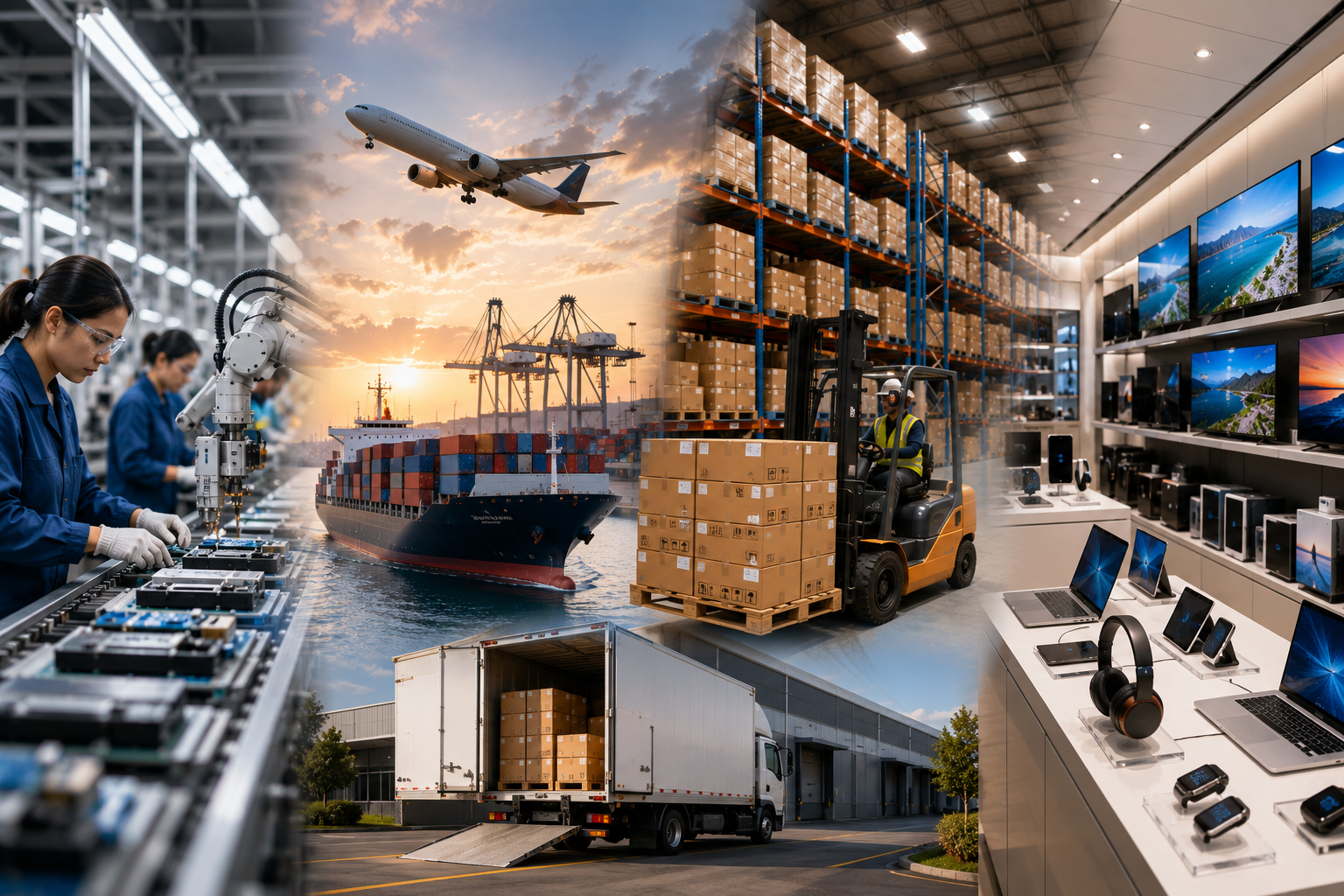
Warehousing has become one of the most consequential decisions an international brand makes when entering the Australian market, since the distance between manufacturing hubs and end customers, combined with strict retailer delivery expectations, makes local stock holding almost unavoidable. Third-party logistics, or 3PL, has emerged as the default model for brands that need national fulfilment capability without building warehouses and freight networks themselves. Understanding what 3PL warehousing Australia providers actually offer, and why it has become standard practice rather than a niche service, helps brands make a more informed decision when planning market entry.
What 3PL Warehousing Actually Involves
Third-party logistics providers manage the physical storage, handling, and dispatch of inventory on behalf of a brand, typically combined with inventory management systems, order processing, and freight coordination. In practice this means a brand ships bulk stock into a provider’s warehouse, and from there the 3PL manages everything from receiving and stock counts through to picking, packing, and dispatching orders to retail partners or individual customers. Most 3PL warehousing Australia arrangements also include returns processing, quality checks on incoming stock, and integration with retailer ordering systems such as EDI, which large chains increasingly require as a condition of doing business. The scope of services varies by provider, with some offering pure pick-and-pack fulfilment and others extending into value-added services like kitting, labelling, and light assembly, which can matter for brands needing region-specific packaging or compliance labelling applied locally. Reporting and stock visibility are also part of the package, with most providers offering dashboards that let brands track inventory levels and order status in real time.
Why National Coverage Matters in Australia
Australia’s population is spread across a small number of major cities separated by significant distances, which creates genuine logistics challenges that differ from more geographically compact markets. A brand relying on a single warehouse, particularly one located overseas, struggles to meet the delivery windows that major retailers and increasingly demanding end consumers expect. 3PL providers with warehousing positioned near key population centres can offer significantly faster delivery to both retail partners and direct customers, which has become a genuine competitive factor as marketplaces like Amazon Australia push delivery speed expectations higher across every category. Regional and remote delivery also requires established freight partnerships, since courier networks and delivery costs vary considerably outside the main metro corridors, and a 3PL with existing carrier relationships can navigate this more efficiently than a brand negotiating freight independently for the first time. Multi-state warehousing also provides a buffer against localised disruptions, such as extreme weather events affecting one region’s freight network.
Cost Structure and When 3PL Makes Financial Sense
3PL arrangements are typically priced through a combination of storage fees, per-order fulfilment charges, and additional costs for value-added services, which makes the model scalable in a way that owning a warehouse is not. For brands still validating demand in the Australian market, this variable cost structure avoids the capital expenditure and fixed overheads of leasing and staffing a dedicated facility, while still providing local stock holding that retailers require. The trade-off is that per-unit fulfilment costs are generally higher than an owned warehouse operating at scale, meaning very high-volume brands sometimes transition to owned infrastructure once volumes justify it. Most brands entering Australia, however, never reach that volume threshold in a single category, making 3PL the more economical choice indefinitely rather than a temporary stepping stone.
Choosing a 3PL Partner That Understands Retail
Not all 3PL providers are equipped to handle the compliance and account management complexity of supplying major Australian retail chains. A generic fulfilment warehouse might handle direct-to-consumer parcels competently but lack experience with retailer-specific packaging requirements, chargeback policies, or EDI ordering formats that chains such as JB Hi-Fi or Harvey Norman require. Brands evaluating a 3PL warehousing and distribution partner should look specifically for experience servicing retail accounts, not just consumer parcel volume, since the operational standards and penalty structures differ meaningfully between the two. Providers with existing retail relationships also tend to understand seasonal planning cycles, which matters enormously around peak trading periods such as Christmas and end-of-financial-year sales.
Integrating 3PL With Broader Distribution Strategy
Warehousing is only one piece of a functioning distribution strategy, and the most effective arrangements integrate 3PL fulfilment with compliance management, retail buyer relationships, and marketing support under a single coordinated operation. Brands that treat warehousing as an isolated logistics decision, separate from retail strategy, often find themselves managing disconnected vendors for freight, compliance, and sales, which creates friction when issues arise. A 3PL warehousing Australia partner that also offers broader distribution capability can align stock positioning with actual retail demand forecasts, rather than warehousing decisions being made in isolation from where and how products are actually selling. This integration also simplifies communication during peak periods, when misaligned stock forecasts between logistics and sales teams cause the most damage.
Frequently Asked Questions
What is 3PL warehousing in Australia?
3PL warehousing means outsourcing storage, order fulfilment, and freight coordination to a third-party provider, allowing brands to hold and dispatch stock locally without owning or operating their own warehouse facilities.
Why do overseas brands need 3PL warehousing in Australia?
Overseas brands need local stock holding to meet retailer delivery windows and consumer delivery expectations, since shipping individual orders from overseas is too slow and costly for competitive retail fulfilment.
How is 3PL pricing typically structured?
3PL pricing generally combines storage fees based on space or pallet volume, per-order fulfilment charges, and additional fees for value-added services such as kitting or custom labelling.
Is 3PL warehousing suitable for small or new brands?
Yes, 3PL is often the most practical option for smaller or newly launched brands, since it avoids the capital cost of leasing warehouse space while still meeting retailer fulfilment requirements.
When should a brand move from 3PL to its own warehouse?
Brands generally consider owned warehousing once order volumes reach a scale where fixed infrastructure costs become cheaper than per-order 3PL fees, though most brands never reach that threshold in a single market.
What should brands look for in a 3PL provider in Australia?
Brands should prioritise providers with proven retail account experience, national warehouse coverage, EDI integration capability, and established freight relationships covering both metro and regional delivery.
