
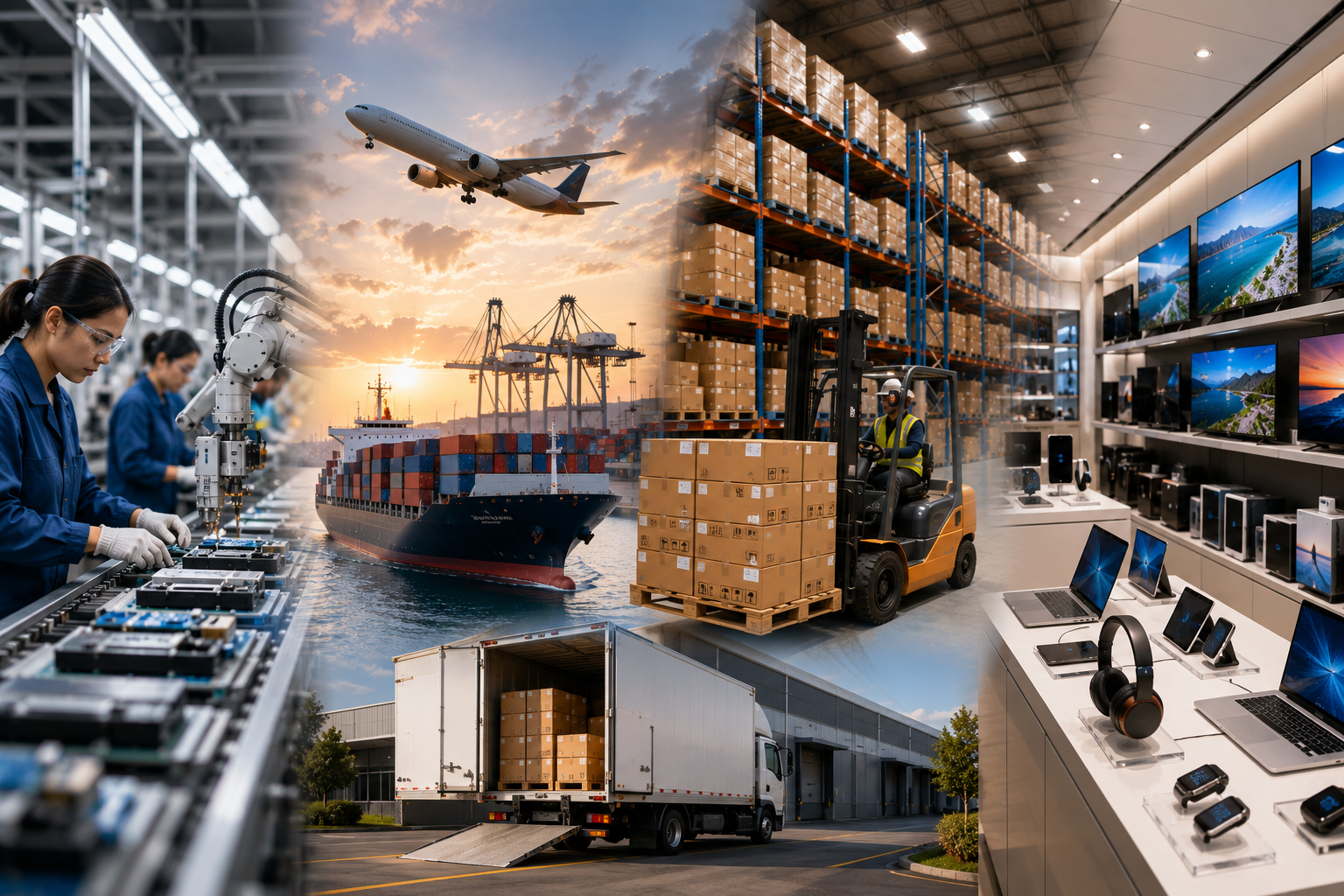
Home appliance distribution Australia has changed considerably over the past few years, shaped by consolidation among major retailers, tighter margin expectations, and consumers who increasingly research and buy across both bricks-and-mortar and online channels within the same purchase journey. For international brands and retail buyers alike, understanding where the market is heading in 2026 matters as much as understanding where it stands today, since strategies built on outdated assumptions about the category tend to underperform. This report sets out the trends currently reshaping how appliances and consumer electronics move from manufacturer to shelf across Australia and New Zealand.
Retail Consolidation Is Raising the Bar for Suppliers
Home appliance distribution Australia continues to concentrate around a smaller number of large retail groups, with JB Hi-Fi, Harvey Norman and major online marketplaces such as Amazon Australia and Kogan accounting for a growing share of category sales. This concentration gives these retailers more negotiating leverage over suppliers on pricing, marketing contribution and fulfilment terms, and it means fewer, larger relationships now carry more weight in a brand’s overall revenue. Suppliers that cannot meet consistent delivery windows or maintain accurate stock data risk losing shelf space to competitors who can. For distributors, this means the bar for onboarding new brands has risen: retailers increasingly favour partners with a proven multi-brand track record over single-brand suppliers without an established operating history. Brands entering the market in 2026 should expect retail buyers to ask more detailed questions about supply chain resilience, including backup warehousing arrangements and contingency plans for freight disruption, before committing to significant order volumes or expanded category placement.
Omnichannel Fulfilment Expectations Are Now the Baseline
Consumers researching appliances and electronics routinely move between marketplace listings, retailer websites and physical stores before purchasing, and retailers expect suppliers to support this behaviour with consistent stock availability and pricing across every channel. This has pushed distributors to integrate inventory systems more tightly with retail partners so that stock levels reflect reality in near real time, reducing cancelled orders and stockout complaints that damage a brand’s standing with a retailer’s category team. Distributors managing 5,000 or more orders weekly across a national retail network need systems and warehousing capable of servicing marketplace direct-to-consumer orders alongside bulk retail replenishment without compromising accuracy on either. Brands still relying on manual order processing or infrequent stock updates are increasingly disadvantaged, since retailers now factor omnichannel reliability into vendor scorecards that influence future order volumes and promotional support across the trading calendar.
Category Growth Is Concentrated in Connected and Battery-Powered Products
Categories showing the strongest growth in 2026 include connected home appliances, personal electric vehicles, and gaming peripherals, reflecting broader consumer interest in smart home integration and personal mobility products. These categories also carry more complex compliance requirements, including additional safety testing for lithium battery products and more detailed labelling obligations, which raises the operational bar for distributors handling them and narrows the field of capable partners. Brands in these categories that partner with a leading home appliances distributor in Australia gain access to established compliance processes and retailer relationships already accustomed to stocking and merchandising these newer product types, shortening the path from certification to shelf considerably compared with brands navigating the category for the first time alone.
Retailers Are Prioritising Fulfilment Accuracy Over Price Alone
Where price competitiveness once dominated retailer supplier selection, fulfilment reliability has become an equally weighted factor, particularly following supply chain disruptions in recent years that exposed fragile logistics arrangements across the sector. Retailers now track on-time and in-full delivery rates closely and use them to inform reorder decisions and category planning, sometimes formally through vendor scorecards reviewed each trading period. A distributor maintaining 99.7% fulfilment accuracy across a high order volume demonstrates the kind of operational consistency that retail buyers increasingly prioritise when allocating shelf space and promotional slots between competing suppliers in the same category.
International Brand Entry Continues to Accelerate
Australia and New Zealand remain attractive entry points for international appliance and electronics brands due to relatively stable retail conditions, established e-commerce infrastructure, and a consumer base with strong purchasing power compared to other Asia-Pacific markets. Brands from Europe and Asia in particular continue to view the region as a proving ground before broader Asia-Pacific expansion into markets with more complex regulatory environments. This sustained interest has increased demand for distribution partners capable of managing compliance, warehousing and retailer relationships on behalf of brands without existing local infrastructure, a trend expected to continue through 2026 as more brands prioritise speed to market over building capability independently from the ground up. Distributors able to demonstrate an established retail network spanning 130-plus partners are typically the first point of contact for brands weighing up market entry options this year.
Frequently Asked Questions
What is driving change in home appliance distribution in Australia?
Retail consolidation, rising omnichannel fulfilment expectations, and growth in connected and battery-powered product categories are the main forces reshaping home appliance distribution Australia-wide heading into 2026.
Which retailers dominate appliance distribution in Australia?
JB Hi-Fi, Harvey Norman, Amazon Australia and Kogan account for a significant and growing share of category sales, giving these retailers considerable influence over supplier pricing and fulfilment terms.
Why does fulfilment accuracy matter more than it used to?
Retailers now use on-time and in-full delivery data to inform reorder and shelf space decisions, making fulfilment accuracy as influential as price in supplier selection following recent supply chain disruptions.
What product categories are growing fastest in Australia?
Connected home appliances, personal electric vehicles and gaming peripherals show the strongest growth, though these categories also carry more complex compliance and safety testing requirements than standard electrical goods.
Is Australia still an attractive market for international brands?
Yes. Stable retail conditions, mature e-commerce infrastructure and strong consumer purchasing power continue to make Australia and New Zealand attractive entry points for international appliance and electronics brands.
How are distributors adapting to omnichannel retail demands?
Distributors are integrating inventory systems more closely with retail partners to maintain real-time stock accuracy across marketplaces, retailer websites and physical stores, reducing cancelled orders and stockout complaints.
